
How will ADB's $200 million loan enhance Dhaka's power reliability?
The Asian Development Bank approved a $200 million loan on 23 September 2026 to modernise electricity distribution in peri-urban Dhaka, aiming to improve supply for businesses and households.
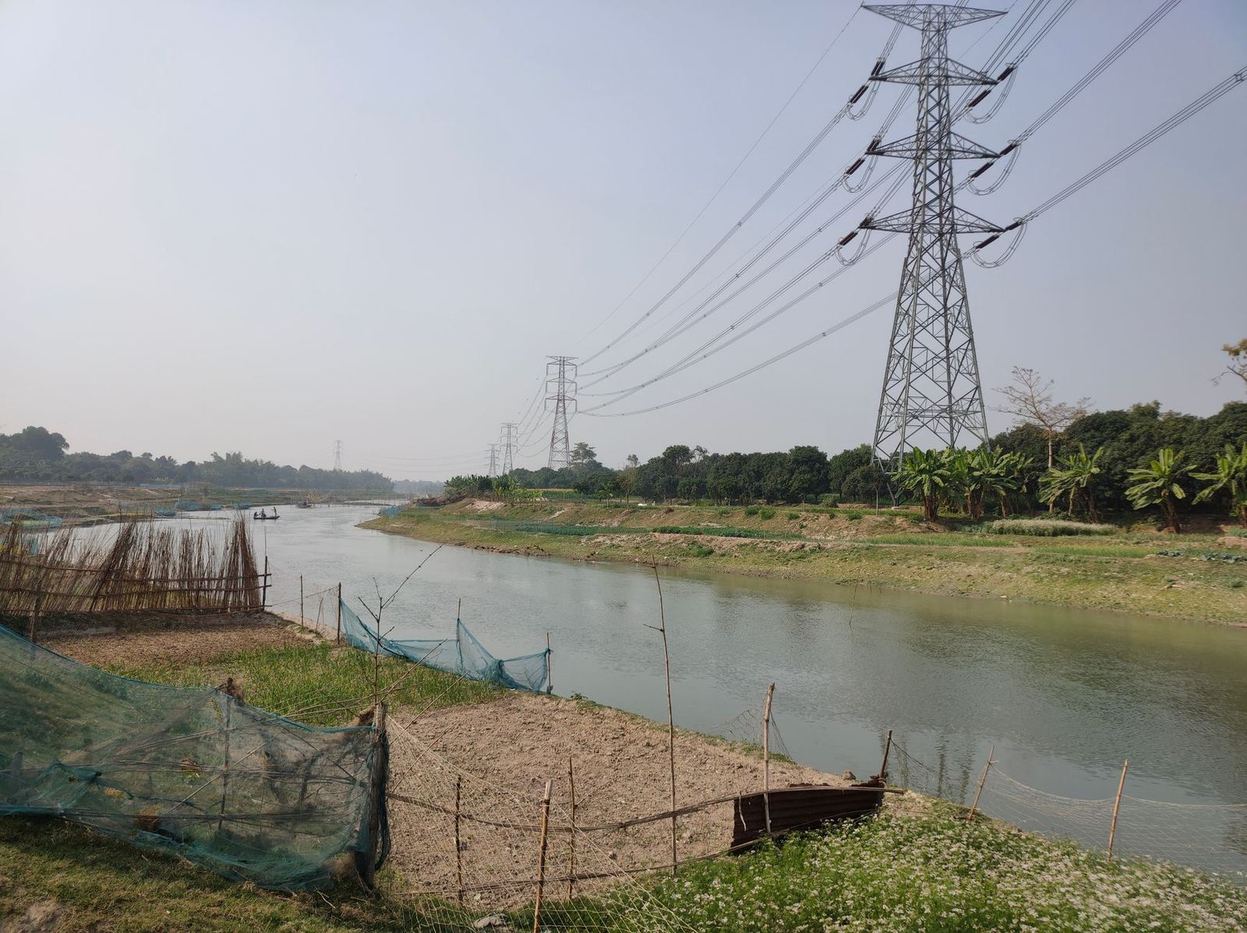
ADB Commits $200 Million for Dhaka Power Upgrade
The Asian Development Bank (ADB) approved a $200 million loan on 23 September 2026, designated for the modernisation and strengthening of Bangladesh's electricity distribution network.
This initiative focuses on the peri-urban areas surrounding Dhaka, with the objective of improving the consistency, efficiency, and resilience of power supply for both commercial enterprises and residential users.
The Power Distribution Network Enhancement Project will support the Bangladesh Rural Electrification Board (BREB) in upgrading infrastructure across 13 Palli Bidyut Samities (PBSs), which are electric cooperatives serving the rapidly expanding industrial and urban zones near the capital.
This funding is part of the ADB-supported Integrated Growth Network Development initiative, designed to resolve issues such as overloaded substations, deteriorating infrastructure, energy losses, and the increasing risks posed by natural hazards that currently hinder reliable electricity provision.
Key Infrastructure Enhancements Detailed
The project outlines specific upgrades to the power network. It will involve the installation of 1,150 megavolt-amperes (MVA) of new transformer capacity across 52 substations, alongside an increase of 115 MVA in the capacity of 12 existing substations.
Furthermore, the plan includes the construction or upgrade of more than 2,600 kilometres of both overhead and underground distribution lines. Insulated conductors will be installed to enhance network reliability, efficiency, and safety. To modernise system operations, the project will build new river-crossing transmission structures and switching stations.
Additionally, 900 fault locator sets will be deployed to enable quicker fault detection and faster restoration of service, addressing operational challenges that affect supply continuity.
Climate Resilience and Capacity Building
Beyond infrastructure, the project allocates $146.52 million of the ADB loan specifically for resilience financing.
This includes support for adaptation tools, such as environment-friendly gas-insulated switchgear technology, which is projected to reduce annual greenhouse gas emissions by approximately 203,751 tons of carbon dioxide equivalent through improved distribution efficiency and reduced technical losses.
The initiative also aims to bolster the institutional capabilities of BREB and the PBSs. This will be achieved through training programmes covering areas such as digital system integration, cybersecurity, operations resilient to natural hazards, environmental and social safeguards, and financial management.
By strengthening the financial sustainability of these electric cooperatives, the project intends to attract increased private sector participation and investment into the power sector. The overall assistance is complemented by $107.95 million in cofinancing from the Government of Bangladesh and $141.39 million from BREB.
A $1 million technical assistance grant from the Republic of Korea e-Asia and Knowledge Partnership Fund, administered by ADB, will also support institutional development and planning.
Future-Proofing Dhaka's Growth Corridors
Bangladesh achieved universal electrification in 2022; however, the country's rapid urbanisation and industrial expansion continue to escalate electricity demand, placing strain on the existing power infrastructure.
This project is intended to reinforce the distribution system's capacity to meet this increasing demand, while also contributing to Bangladesh’s goals for development that is resilient to natural hazards and low-carbon.
Qingfeng Zhang, ADB Country Director for Bangladesh, stated that modern power distribution networks are crucial for sustaining economic growth, fostering employment, and attracting investment as Bangladesh progresses towards becoming a more prosperous and globally competitive economy.
The upgrades are designed to future-proof the power system in key growth corridors around Dhaka, ensuring businesses and communities have the dependable electricity required for their continued development.
Investors and businesses operating or considering operations in Dhaka's industrial and urban periphery should anticipate more stable and efficient power access, which could reduce operational disruptions and support further expansion from 2027 onwards as the project phases complete.
This analysis is journalism, not investment advice; consult a licensed professional before making financial decisions.
Pieces are credited to the desk that commissioned and edited them. Our editorial standards, and the desks behind them, are set out on the Editorial Standards and Team pages.
Further reading
- Briefings · Markets
How do loose financial conditions affect gold's safe-haven role?
New research from BIS Working Papers, published 06 October 2026, indicates that gold prices experience their most significant gains from geopolitical risk when financial conditions are accommodative, a trend observed from 2024 to 2026.
Continue reading → - Briefings · Industry
How prevalent are AI-to-AI investment deals globally?
Between 2021 and 2025, over half of all capital flowing into artificial intelligence firms originated from within the sector, according to analysis from the BIS published on 01 October 2026.
Continue reading → - Briefings · Industry
Does East Asia's AI export growth translate to broad economic benefit?
While East Asian countries recorded US$1.4 trillion in AI-related exports in the year to April, the World Bank suggests these gains may not create widespread employment or capture significant value for regional economies.
Continue reading →