
India drives NDB's new capital strategy under BRICS chairship
The New Development Bank approved $44 billion for 141 projects by June 2026, with India acting as both a founding member and a significant borrower while leading new capital mobilisation efforts.
NDB's Expanding Lending and Membership
The New Development Bank (NDB) had approved approximately $44 billion for 141 initiatives by the end of June 2026. These projects span clean energy, transport, water systems, and digital infrastructure across its member states.
Of the total approved, about $25 billion had already been disbursed to borrowers by the same date, indicating a substantial rate of project execution rather than mere agreement signing. For instance, NDB financing is supporting the development of 2,400 megawatts of clean energy capacity and 1,400 kilometres of tunnels and canals.
The bank’s membership has also broadened beyond its original five founding nations—Brazil, Russia, India, China, and South Africa—to include Algeria, Bangladesh, Egypt, the United Arab Emirates, and Uzbekistan, extending its reach across Asia, Africa, the Middle East, and Latin America.
India's Dual Role in NDB Operations
India occupies a distinct position within the NDB, serving as both a founding member and one of its principal borrowers. Each founding member holds an equal share of approximately 18.7 percent of the bank’s capital, a structure designed to prevent any single country from dominating.
Despite this, India has utilised NDB loans more extensively than most members, securing approvals for 32 initiatives valued at close to $9.5 billion since 2016. These projects focus on transport, social development, and clean energy.
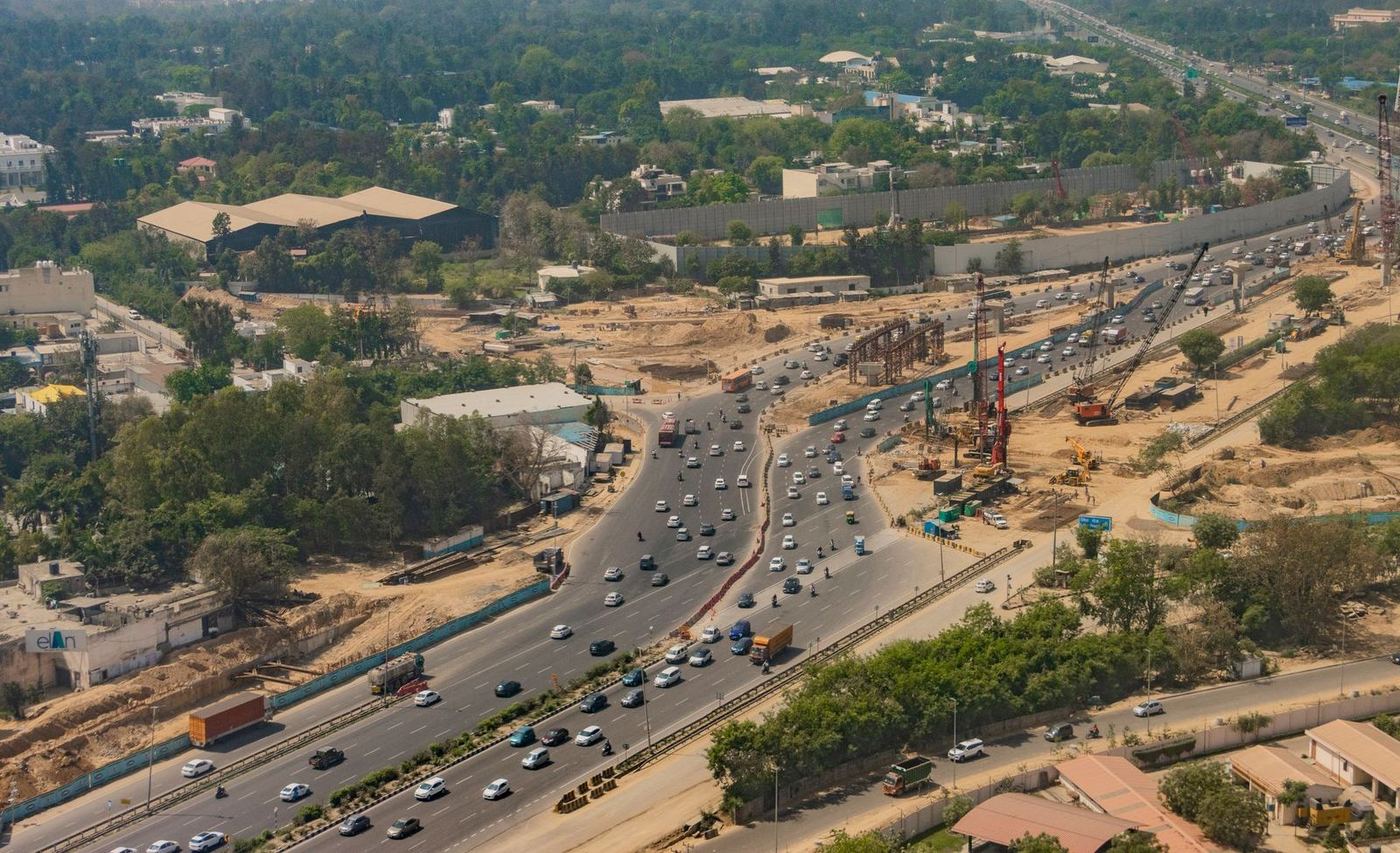
Recent approvals in 2026 include a $300 million clean energy project with REC Limited and an affordable housing initiative supported by the Housing and Urban Development Corporation (HUDCO). Earlier financing included $500 million for the 82-kilometre rapid transit line connecting Delhi and Meerut.
Diversifying Capital Mobilisation
India’s BRICS chairship in 2026 has significantly influenced the NDB’s approach to funding, particularly in attracting private capital. In August 2026, the NDB and the Indian government convened a joint meeting to explore methods for increasing private sector involvement in development projects.
NDB President Dilma Rousseff identified this as a key priority, recognising the need to finance large-scale infrastructure beyond what national governments can solely provide. Indian Finance Minister Nirmala Sitharaman articulated that development banks can enhance the safety and predictability of projects for private investors, thereby drawing in more private funding.
This strategy was further advanced on September 10, 2026, when the bank raised 7 billion Chinese yuan through a bond sale in China, establishing a new funding channel. On the same day, a BRICS-NDB knowledge portal was launched, linked to India’s chairship.
Implications for Asian Infrastructure Investment
The NDB’s diversification of funding sources, particularly its recent bond issuance in China and efforts to attract private investment, marks a shift towards greater financial autonomy from member governments. This evolution could position the NDB as a more consistent and reliable lender for developing countries across Asia and other regions.
For Asian decision-makers, the development of new capital mobilisation strategies, such as the September 2026 bond sale, suggests potential for reduced reliance on traditional multilateral funding channels.
Investors in Asian infrastructure projects may observe how the NDB's de-risking initiatives, as highlighted by India's Finance Minister in August 2026, translate into concrete opportunities for private participation in large-scale projects, particularly in clean energy and transport.
Future NDB bond issuances in diverse markets and the volume of private capital attracted to its projects will be key metrics to monitor.
This analysis is journalism, not investment advice; consult a licensed professional before making financial decisions.
Pieces are credited to the desk that commissioned and edited them. Our editorial standards, and the desks behind them, are set out on the Editorial Standards and Team pages.
Further reading
- Briefings · Markets
How does Vietnam's 9.95% Q3 growth affect its 2026 target?
Vietnam's economy expanded by 9.95% in the third quarter of 2026, marking its quickest pace in four years, yet it requires a significant acceleration in Q4 to meet its annual goal.
Continue reading → - Briefings · Policy
Will Hong Kong's Five-Year Tax Relief Attract Major Innovation Firms?
Hong Kong lawmakers expressed reservations about the government's plan to offer 5% or 8.25% profits tax for up to five years to innovative companies, arguing the period is too short to draw new headquarters.
Continue reading → - Briefings
Will AI-driven automation constrain economic growth?
A new working paper from the Bank for International Settlements suggests widespread AI adoption could paradoxically slow long-term economic expansion by shrinking consumer markets.
Continue reading →