
Why did Marina Bay Sands' Q3 2026 performance weaken?
Singapore's Marina Bay Sands reported a 20.6 per cent fall in adjusted property EBITDA to US$590 million for Q3 2026, with net revenue down 9.9 per cent year-on-year to US$1.29 billion.
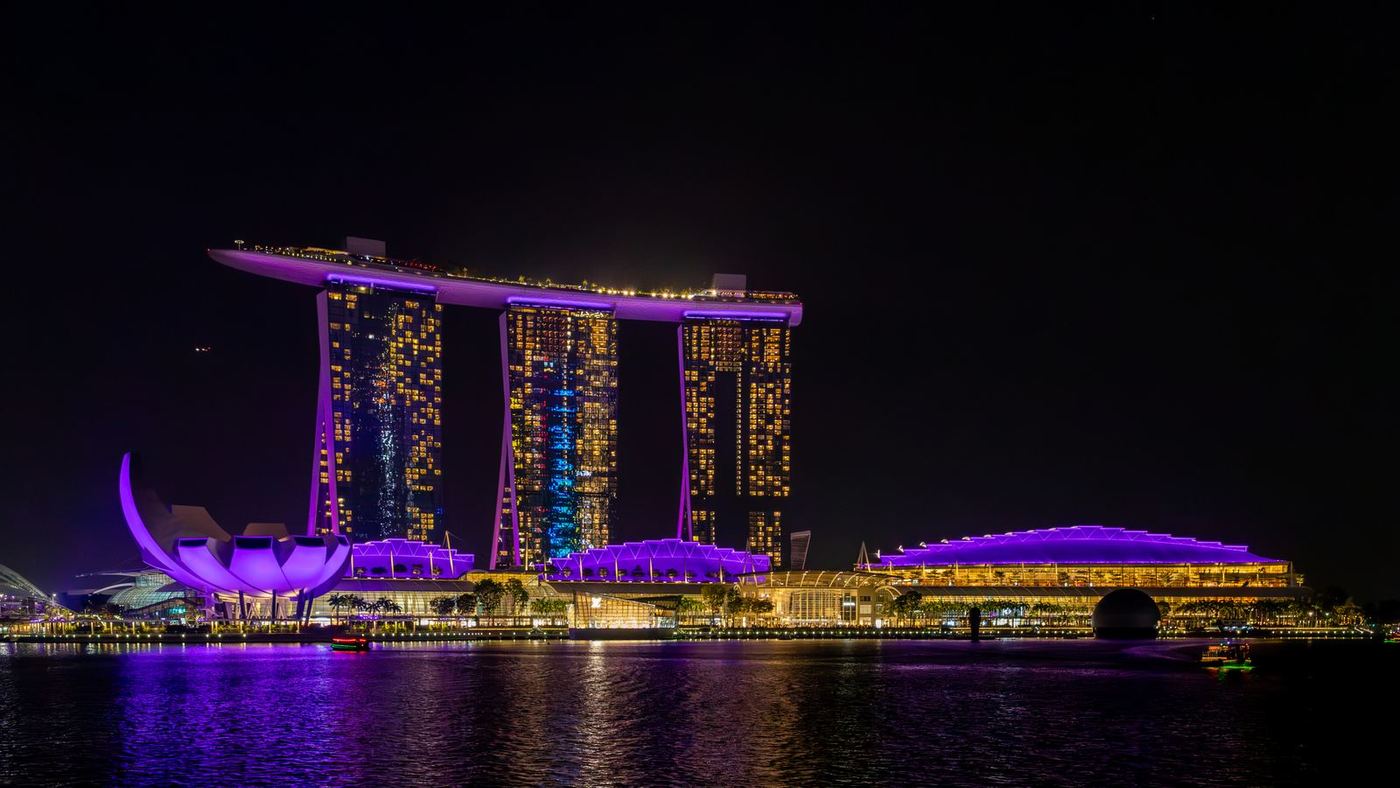
Marina Bay Sands' Q3 2026 Financial Results
Marina Bay Sands (MBS), the integrated resort and casino operator in Singapore, recorded a weaker financial performance for the third quarter ended 30 September 2026. The company's adjusted property earnings before interest, taxes, depreciation, and amortisation (EBITDA) decreased by 20.6 per cent to US$590 million for the quarter.
This figure compares to US$743 million reported in the same period a year prior. Net revenue also saw a decline, contracting by 9.9 per cent year-on-year to US$1.29 billion, down from US$1.44 billion in Q3 2025. Parent company Las Vegas Sands (LVS) attributed these results to specific market dynamics, as stated in their earnings call on 21 October 2026.
Factors: High-Value Patron Visitation and Gaming Hold
The primary drivers behind MBS's reduced performance were lower visitation from high-value patrons and a weaker gaming 'hold'. Patrick Dumont, Chairman and CEO of Las Vegas Sands, noted during the 21 October 2026 earnings call that the highest-spending patrons did not visit as frequently during the quarter.
This trend was observed across LVS's properties in both Singapore and Macau. Dumont further explained that the quarter's results might not accurately represent the full earning potential of their assets. Gaming 'hold' refers to the proportion of money a casino retains as revenue from the total amount wagered.
Had MBS achieved its expected hold rate in rolling play, its adjusted property EBITDA for Q3 2026 would have been US$4 million higher, reaching US$594 million.
Non-Gaming Segments Provide Offset
While MBS's casino revenue for Q3 2026 declined by 14.9 per cent to US$916 million, the resort's non-gaming segments showed growth, partially mitigating the overall revenue reduction. Room revenue increased by 5.2 per cent to US$162 million, with revenue per available room reaching US$994, a 6.1 per cent rise from a year earlier.
Food and beverage revenue grew by 9.5 per cent to US$104 million. The retail mall segment contributed US$70 million, marking a 1.4 per cent increase, and the convention, retail, and other segments collectively saw a 2.4 per cent rise to US$42 million. This diversification demonstrates the resort's ability to generate income across multiple business lines.
Impact on Las Vegas Sands Group-Level Performance
The performance at Marina Bay Sands contributed to a decline in the overall results for its parent company, Las Vegas Sands. For the third quarter ended 30 September 2026, LVS reported a net income of US$352 million, a 28.3 per cent decrease compared to the corresponding quarter in 2025.
Consolidated adjusted property EBITDA for the group fell by 16.7 per cent to US$1.12 billion. Furthermore, LVS's net revenue contracted by 3.5 per cent year-on-year, totalling US$3.22 billion. Despite these financial shifts, LVS announced a dividend of US$0.30 per share for Q3 2026, scheduled for payment on 10 November 2026.
Outlook for Asia's Integrated Resort Market
The Q3 2026 results from Marina Bay Sands highlight the sensitivity of integrated resort performance to high-value patron activity and gaming hold rates, a dynamic relevant to the broader Asian market.
The observed volatility suggests that while non-gaming revenues can offer some stability, the core gaming segment remains a key determinant of profitability for operators like MBS. Decision-makers in the hospitality and gaming sectors will closely monitor future visitation trends and gaming performance across Asia.
The next significant data point for LVS, and by extension MBS, will be the Q4 2026 earnings report, typically released in late January or early February 2027, which may indicate if the anticipated recovery in high-value patron visits materialises.
This analysis is journalism, not investment advice; consult a licensed professional before making financial decisions.
Pieces are credited to the desk that commissioned and edited them. Our editorial standards, and the desks behind them, are set out on the Editorial Standards and Team pages.
Further reading
- Briefings · Policy
What will the ADB's $139.55 million loan deliver for Puducherry's urban infrastructure?
The Asian Development Bank approved a $139.55 million loan on 30 October 2026 to enhance Puducherry's water, sanitation, and public spaces, aiming to boost the Indian city's competitiveness for investment and tourism.
Continue reading → - Briefings · Policy
How will ADB's $104.5 billion financing reshape its Asia-Pacific operations?
The Asian Development Bank's first Strategic Business Outlook details $104.5 billion for 2027–2029, alongside reforms to enhance project preparation and delivery across the region.
Continue reading → - Briefings · Policy
Do contingent tariffs in trade agreements reduce deforestation?
New research suggests that linking market access to forest conservation could prevent agricultural expansion and even lead to reforestation, with implications for Asian nations negotiating with the European Union.
Continue reading →