
How will Nepal fund its $4.7 billion post-flood reconstruction?
Nepal faces a $4.72 billion reconstruction bill following the August 2026 Himalayan floods, with international climate finance proposals currently falling short of the estimated needs.
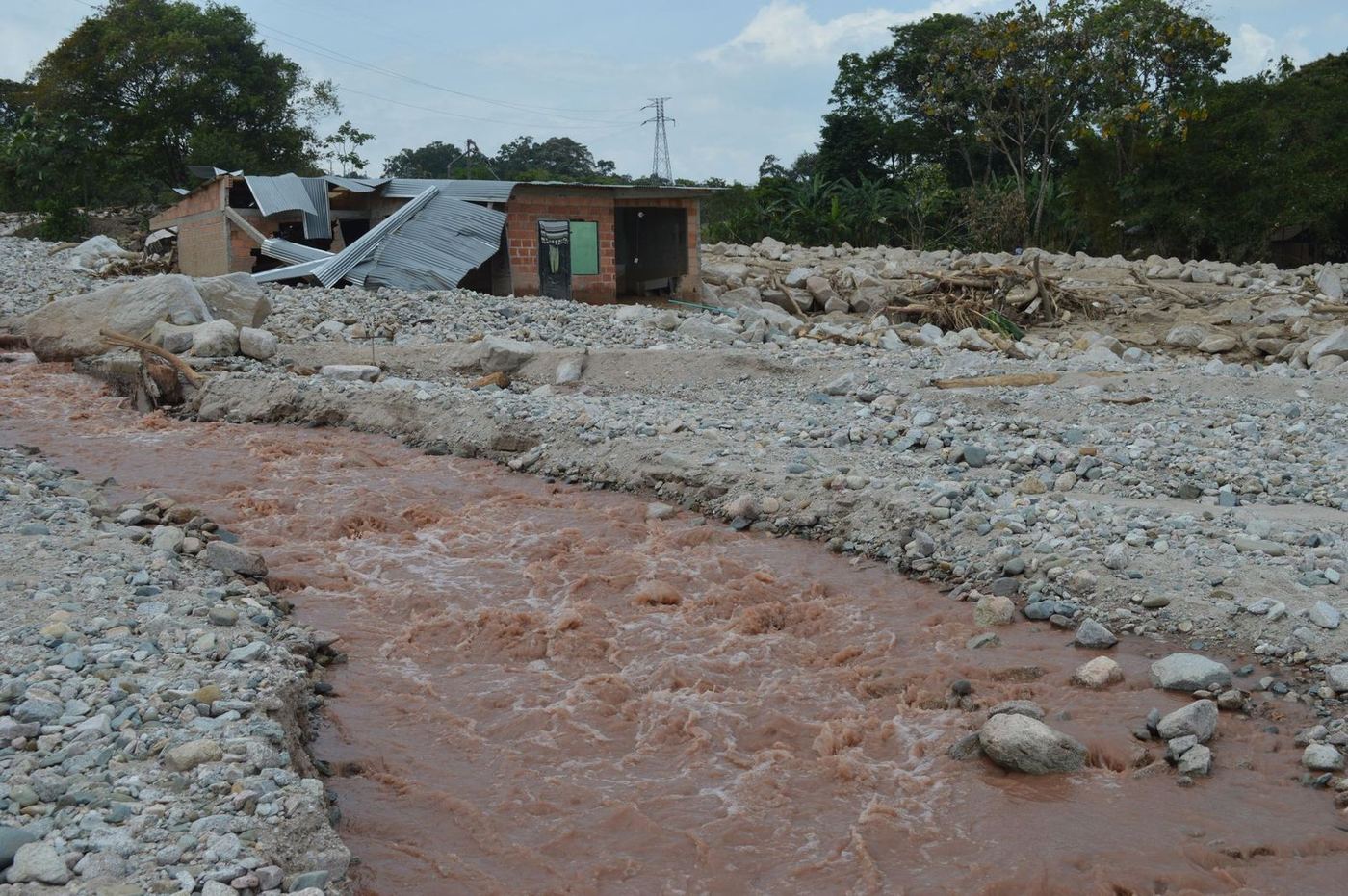
Nepal's $2.66 Billion Flood Damage
Nepal is confronting significant economic and human costs from devastating floods that struck its Himalayan region on August 26, 2026. A high-altitude glacier collapse in the Langtang/Lirung Mountain range triggered a "Himalayan tsunami," leading to widespread destruction.
As of September 19, 2026, the disaster had resulted in 1,451 fatalities and left 5,786 people missing, affecting approximately 1.6 million individuals across five districts, according to the Nepali government's situation report. The Rapid Damage and Need Assessment (RDNA) estimates total damage and losses at more than $2.66 billion.
The government has identified a need for about $4.72 billion for reconstruction and rehabilitation efforts, alongside $5.7 million for immediate relief and short-term rehabilitation over the next six months. Infrastructure damage includes 41 motorable bridges, roads, 12 hydropower projects, and 7,570 private houses.
Climate Change Link and Funding Gap
Scientists from World Weather Attribution (WWA) have identified climate change and rising temperatures in the Himalayan region as significant contributors to the August 2026 disaster, describing it as a "catastrophic rock-ice avalanche that transitioned into a debris flood." In response, the government of Nepal has formally requested reparations from the Loss and Damage Fund for climate change impacts.
The fund has indicated it will consider providing up to $20 million in compensation, pending sufficient evidence regarding the flood's causes. This proposed support contrasts sharply with the estimated losses and reconstruction costs, highlighting a substantial gap between the scale of the damage and the international financial assistance currently under consideration.
Calls for Reparation, Not Loans
While the World Bank has offered Nepal concessional loans to aid recovery, civil society groups and youth campaigners are advocating for grants as reparation, not loans. They argue that climate finance should be treated as a matter of justice, given that Nepal bears the costs of climate-related impacts to which it has not significantly contributed.
Since September 18, 2026, ten young people have commenced a hunger strike at the base camp of Mount Manaslu, demanding assessments of future glacial lake outburst flood risks, regular joint monitoring of lakes along the China-Nepal border, and climate compensation.
These campaigners emphasise the need for a regional framework across the Hindu Kush Himalaya for shared information, early-warning systems, and institutional mechanisms.
Nepal's UN General Assembly Appeal
Nepali Prime Minister Balendra Shah is currently attending the 81st United Nations General Assembly (UNGA) in New York, where he plans to raise the issue of the climate crisis impacting Nepal. This platform offers Nepal an opportunity to present the context and specific causes of the recent disaster to the international community.
Foreign Minister Sisir Khanal has also travelled to the UNGA and is scheduled to participate in side events, where he is expected to appeal for international support to help Nepal overcome the crisis.
These diplomatic efforts aim to secure the necessary funding and technical assistance to address the extensive damage and long-term rehabilitation requirements arising from the August 2026 floods.
Outlook for Climate Justice Funding
The substantial financial requirements for Nepal's flood recovery, estimated at $4.72 billion for reconstruction, underscore a critical challenge for global climate finance frameworks.
The disparity between Nepal's needs and the initial $20 million compensation considered by the Loss and Damage Fund highlights the ongoing debate over whether climate finance should be structured as compensatory justice or charitable aid.
For Asian policymakers and investors, Nepal's experience serves as a case study for future climate-induced disasters across the region, particularly in vulnerable Himalayan nations.
The outcome of Nepal's appeals at the UNGA and the subsequent decisions by international financial mechanisms will set precedents for how similar climate-related losses are addressed, with the next key indicator being any further commitments or specific funding allocations announced by international bodies in the coming months.
This analysis is journalism, not investment advice; consult a licensed professional before making financial decisions.
Pieces are credited to the desk that commissioned and edited them. Our editorial standards, and the desks behind them, are set out on the Editorial Standards and Team pages.
Further reading
- Briefings · Policy
How is AI adoption reshaping systemic financial risk oversight in Europe?
Christine Lagarde noted that nearly 90% of large Euro area banks use generative AI, prompting the European Systemic Risk Board to reassess financial system stability.
Continue reading → - Briefings · Policy
What does ADB's $305.75 million mean for Nepal's trade and infrastructure?
The Asian Development Bank approved $305.75 million on 9 October 2026 to upgrade Nepal's East–West and Prithvi Highways, enhancing trade connectivity and resilience while integrating wildlife conservation.
Continue reading → - Briefings · Industry
Samsung offers significant bonuses to retain chip engineers
Samsung's largest union estimates a memory chip worker could receive approximately $560,000 in pre-tax bonuses, including a new special payment linked to 10.5% of the chip division's 2026 operating profit.
Continue reading →