
Foreign Banks Bridge Vietnam's Funding Gap with Hard-Currency Loans
Foreign financial institutions are extending hard-currency loans to Vietnamese lenders, providing capital to support national economic growth objectives amidst rising domestic funding costs and credit expansion pressures. This strategy addresses a significant shortfall in local capital availability.
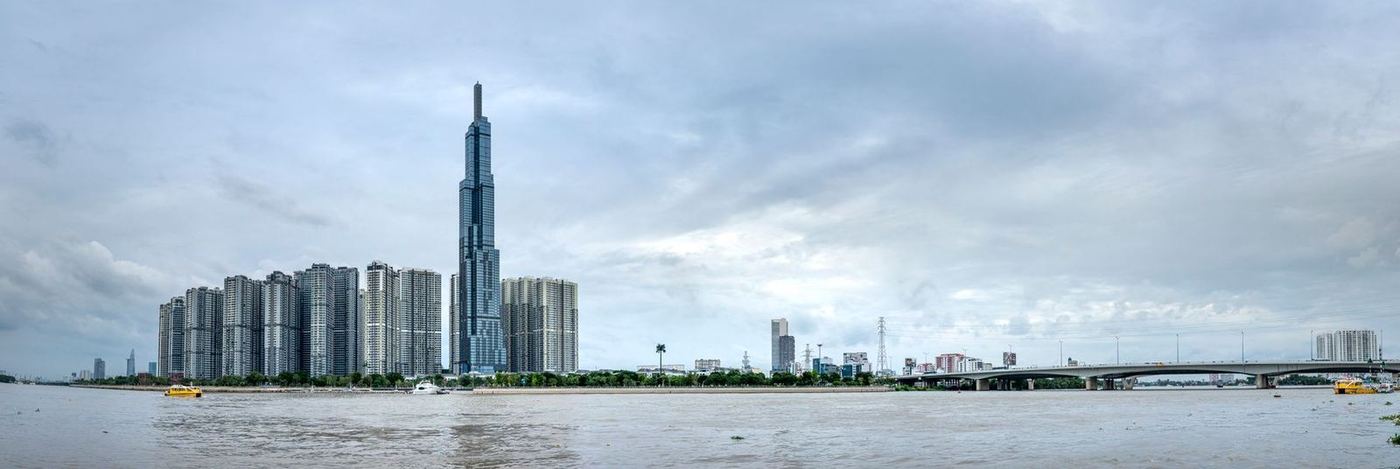
Vietnam's Funding Requirements Exceed Domestic Capacity
Vietnam’s economy faces a challenge in securing sufficient domestic capital to meet its ambitious expansion targets. The government aims for an annual economic growth rate of at least 10% through 2030, alongside planned infrastructure investments estimated at $200 billion.
Achieving these objectives necessitates a substantial increase in credit, placing pressure on the domestic banking system. While the central bank adjusted the banking system’s credit-growth target to 15% from 20% in 2025, credit expansion had already surpassed 18% year-on-year by June 2026.
This rapid credit growth, coupled with difficulties in attracting domestic deposits, has elevated funding costs for Vietnamese banks, driving them to seek alternative capital sources.
Offshore Capital Inflows and Key Transactions
To bridge this funding deficit, Vietnamese banks are increasingly securing hard-currency loans from foreign financial institutions. This trend demonstrates a growing reliance on offshore capital, with Chinese, Taiwanese, and Middle Eastern banks reportedly showing interest, as noted by Willie Tanoto of Fitch Ratings.
Significant syndicated loan agreements have been observed in recent months. VPBank, a major private bank, secured a $1.44 billion offshore loan in June 2026, with Sumitomo Mitsui playing a central role. HDBank, a mid-sized private bank, followed in July 2026 with an international syndicated loan of $721 million, exceeding its initial target by approximately 60%.
Lenders in this deal included Standard Chartered, Commerzbank, and MUFG Bank. Techcombank also seeks a foreign loan of $1 billion, pending regulatory approval, as confirmed by its CEO Jens Lottner to Reuters.
Economic Rationale for International Borrowing
The appeal of offshore funding for Vietnamese banks stems from the comparative economics of borrowing. Domestic interest rates on long-term deposits rose in June 2026 to a range of 5.9%–7.8%, an increase from 4.8%–7.1% a year earlier, according to Vietnam's central bank.
In contrast, offshore loans often carry interest rates below those paid on domestic deposits, as observed by a consultant at a Vietnam-based securities firm. This differential makes international markets an economically sensible option for medium to long-term funding, particularly when dollar funding is relatively inexpensive.
Techcombank, for instance, routinely accesses international markets under favourable conditions, having raised a similar amount overseas in 2022, according to CEO Jens Lottner.
Persistent Domestic Liquidity Constraints
Despite the increase in offshore borrowing, the fundamental challenge of domestic deposit shortages persists. While deposit growth accelerated in the second quarter of 2026, the loan-to-deposit ratio remained elevated at 102.4%, according to data from brokerage SSI.
The central bank has attempted to alleviate pressure by relaxing prudential rules in July 2026 and adjusting the calculation method for the loan-to-deposit ratio, effectively providing banks with greater scope to extend credit.
However, these measures do not resolve the underlying issue of attracting sufficient domestic deposits to meet the long-dated financing needs of large infrastructure projects, some of which, like a railway developed by Vingroup, are exempt from credit limits.
Implications for Capital Flows and Systemic Stability
The increasing reliance on offshore funding, while diversifying capital sources, introduces considerations for Vietnam’s financial system. While well-managed, staggered maturities and hedged foreign exchange exposures can mitigate risks, a sustained dependency on external capital does not address the domestic savings gap.
Policymakers and financial institutions must consider the potential for increased currency exposure and the implications for long-term financial stability if domestic capital formation does not keep pace with credit demand.
Decision-makers should closely monitor the central bank’s liquidity reports for the third quarter of 2026, expected in late October, for specific data on deposit growth and any shifts in the aggregate loan-to-deposit ratio, which will reveal the extent of the domestic funding challenge.
This analysis is journalism, not investment advice; consult a licensed professional before making financial decisions.
Pieces are credited to the desk that commissioned and edited them. Our editorial standards, and the desks behind them, are set out on the Editorial Standards and Team pages.
Further reading
- Briefings · Industry
How will Japan's fiscal 2031 quantum sensor drone plan reshape undersea surveillance?
Japan's defence budget request, released in late August, outlines a plan to deploy drone-mounted quantum magnetic sensors by fiscal 2031. This initiative seeks to improve maritime detection efficiency and reduce operational costs.
Continue reading → - Briefings · Markets
How do US$100 oil and 5% US yields divide ASEAN currencies?
Analysts observe a significant split in regional currency performance, with some benefiting from trade surpluses and capital inflows while others face import cost pressures.
Continue reading → - Briefings · Markets
How will RBI's September 16 reverse repo affect India's liquidity?
The Reserve Bank of India will conduct an overnight variable rate reverse repo operation on September 16, 2026, aiming to absorb surplus funds from the banking system.
Continue reading →