
Can China's MAZU AI weather system deliver for Pakistan?
Pakistan has used the MAZU system since October 2025, but experts warn its accuracy depends on robust local data and comprehensive disaster response.
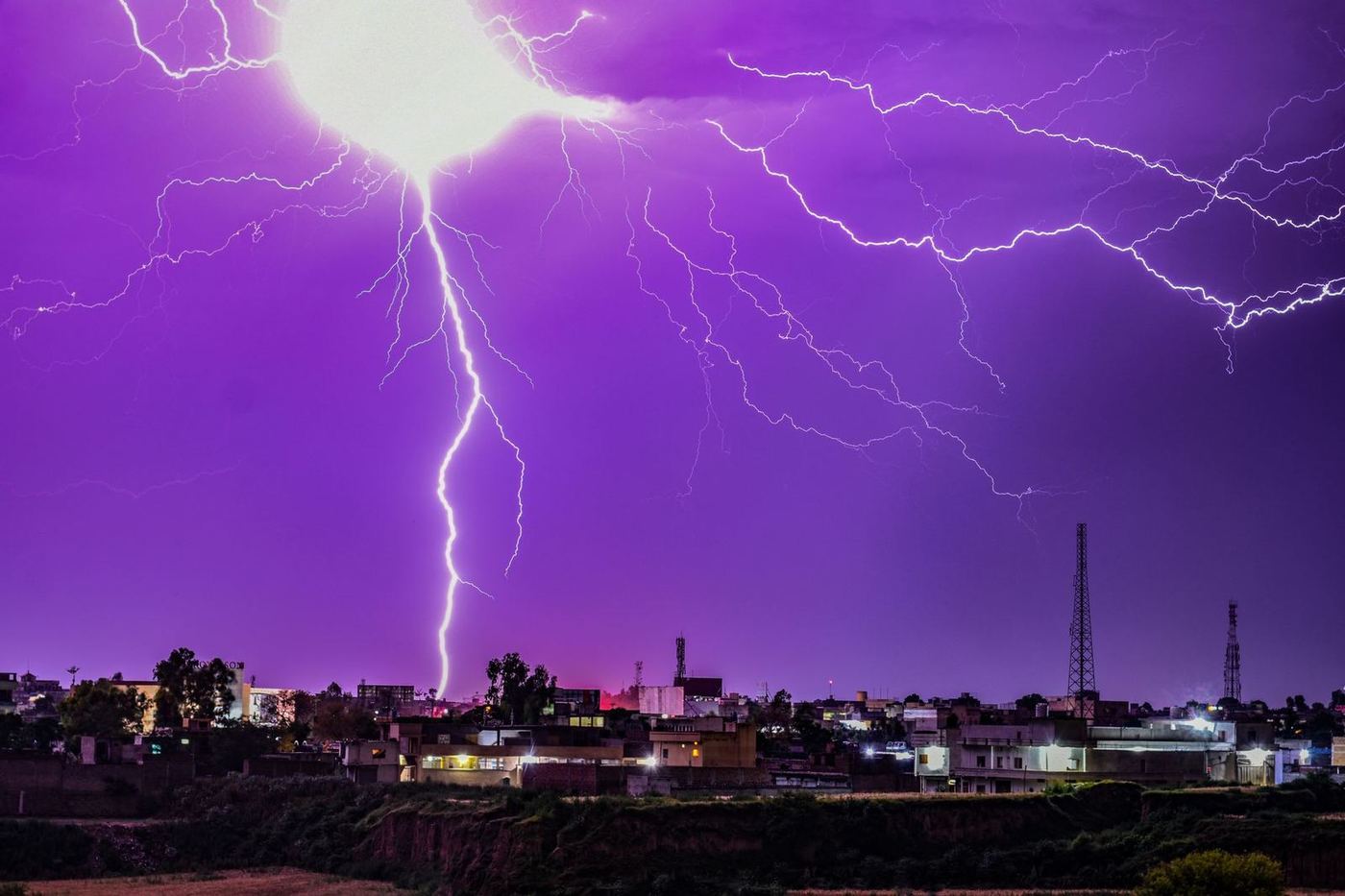
Pakistan adopts MAZU for early warnings
Pakistan's Meteorological Department (PMD) has used a tailored version of China's MAZU artificial intelligence weather forecasting system since October 2025.
This deployment is part of China's "South-South cooperation on climate change," with Pakistan being the first country to benefit from this specific innovative solution, according to Yin Shengxin, science attaché of the Chinese Embassy in Islamabad.
MAZU, an acronym for "multi-hazard, alert, zero-gap and universal," is designed to provide faster forecasts and enhance early warning capabilities. Zaheer Ahmed Babar, chief meteorologist and acting director general of the PMD, stated that while the system cannot prevent extreme weather, it enables forecasters to make more informed decisions to reduce potential losses.
Muhammad Irfan Virk, director of Pakistan's National Weather Forecasting Centre, visited the China Meteorological Administration (CMA) in Beijing in 2024 to assist in adapting the platform for Pakistan's specific needs.
Data quality and local context are crucial
Despite MAZU's advanced capabilities, experts caution that its effectiveness is contingent on the quality of local data and a nation's capacity for disaster response.
Imran Khalid, a climatologist with Oxford Policy Management, warned that AI tools, without detailed ground data, risk producing confident local forecasts that lack real observational basis, potentially leading to serious consequences.
AI-weather modelling experts, as reported by Eco-Business Policy & Finance on 25 September 2026, generally support the system's use but note it is premature to determine its accuracy within Pakistan's distinct climate and geographical conditions.
Zaheer Ahmed Babar of the PMD confirmed that MAZU can be calibrated to a country's specific geography and risks by integrating local meteorological data, and Pakistani forecasters have received training on their customised version.
China's expanding AI meteorological initiatives
China is actively promoting the international expansion of MAZU, with Chen Zhenlin, administrator of the China Meteorological Administration (CMA), announcing further cooperation in April 2026.
Chen Zhenlin emphasised that early warning systems offer a cost-effective method to protect lives and property, especially as extreme weather events increasingly threaten food and energy security.
At the 2026 World Artificial Intelligence Conference in Shanghai in July, Chinese President Xi Jinping pledged that China would provide 5,000 AI training and seminar opportunities and enable 30 developing countries to use MAZU over the next five years. Beyond Pakistan, MAZU has also been deployed in Djibouti, Ethiopia, Mongolia, Jordan, Sri Lanka, and the Solomon Islands. China also supports over 40 countries with cloud-based virtual trials of the system.
Integrating AI into comprehensive disaster management
Climatologist Imran Khalid stated that while AI-based weather tools enhance early warning systems, they are not standalone solutions for addressing existing gaps.
Zaheer Ahmed Babar of the PMD explained that an effective early warning system requires a comprehensive, whole-of-government strategy built on four core components: disaster risk management, accurate detection and forecasting, efficient dissemination and communication, and robust preparedness and response.
Asim Javid, CEO of AI Geo Navigators, highlighted MAZU's value in integrating conventional meteorology, satellite and radar data, ground observations, and local calibration with AI insights. This unified approach, he noted, transforms how forecasters operate.
This holistic view is also supported by Junaid Yamin, co-founder of the Pakistani subscription weather forecast service WeatherWalay.
Implications for Asian economies and policy
For Asian decision-makers evaluating advanced meteorological AI, Pakistan's experience shows that technology adoption, such as MAZU, requires substantial investment in foundational data infrastructure and comprehensive disaster response protocols.
The system's ability to protect food and energy security, as noted by CMA administrator Chen Zhenlin in April 2026, depends directly on the quality of local data inputs and the capacity for local validation.
Countries like Sri Lanka and the Solomon Islands, which have also deployed MAZU, will need to demonstrate similar commitments to data quality and response mechanisms to fully realise the system's potential to reduce economic losses from extreme weather.
The success of these deployments will serve as a key indicator for other developing Asian economies assessing the viability of AI-powered early warning systems, especially as China aims to expand MAZU's reach to 30 countries over the next five years, as announced in July 2026.
This analysis is journalism, not investment advice; consult a licensed professional before making financial decisions.
Pieces are credited to the desk that commissioned and edited them. Our editorial standards, and the desks behind them, are set out on the Editorial Standards and Team pages.
Further reading
- Briefings · Policy
What economic disruption does IMF foresee from AI for Asia?
The International Monetary Fund's Managing Director Kristalina Georgieva warned of AI's pervasive impact on labour markets and government revenues, while projecting up to a percentage point growth for advanced Asian economies.
Continue reading → - Briefings · Policy
Has Australian security policy curbed China research collaboration?
Despite increased security governance, co-authored educational articles between Australian and Chinese researchers rose 53.7% between 2023 and 2024, reaching a decade high.
Continue reading → - Briefings · Industry
How does Vicor's latest US import ban bid affect Taiwan's AI server firms?
Power component producer Vicor Corporation has made a second attempt this year to prevent imports of AI server power hardware from Foxconn, Quanta, and Delta into the US market.
Continue reading →