
ADB commits $210m to boost Fiji's economic resilience
The Asian Development Bank committed $210 million to Fiji on 16 September 2026, comprising loans for policy reforms and rapid disaster response to safeguard its economy.
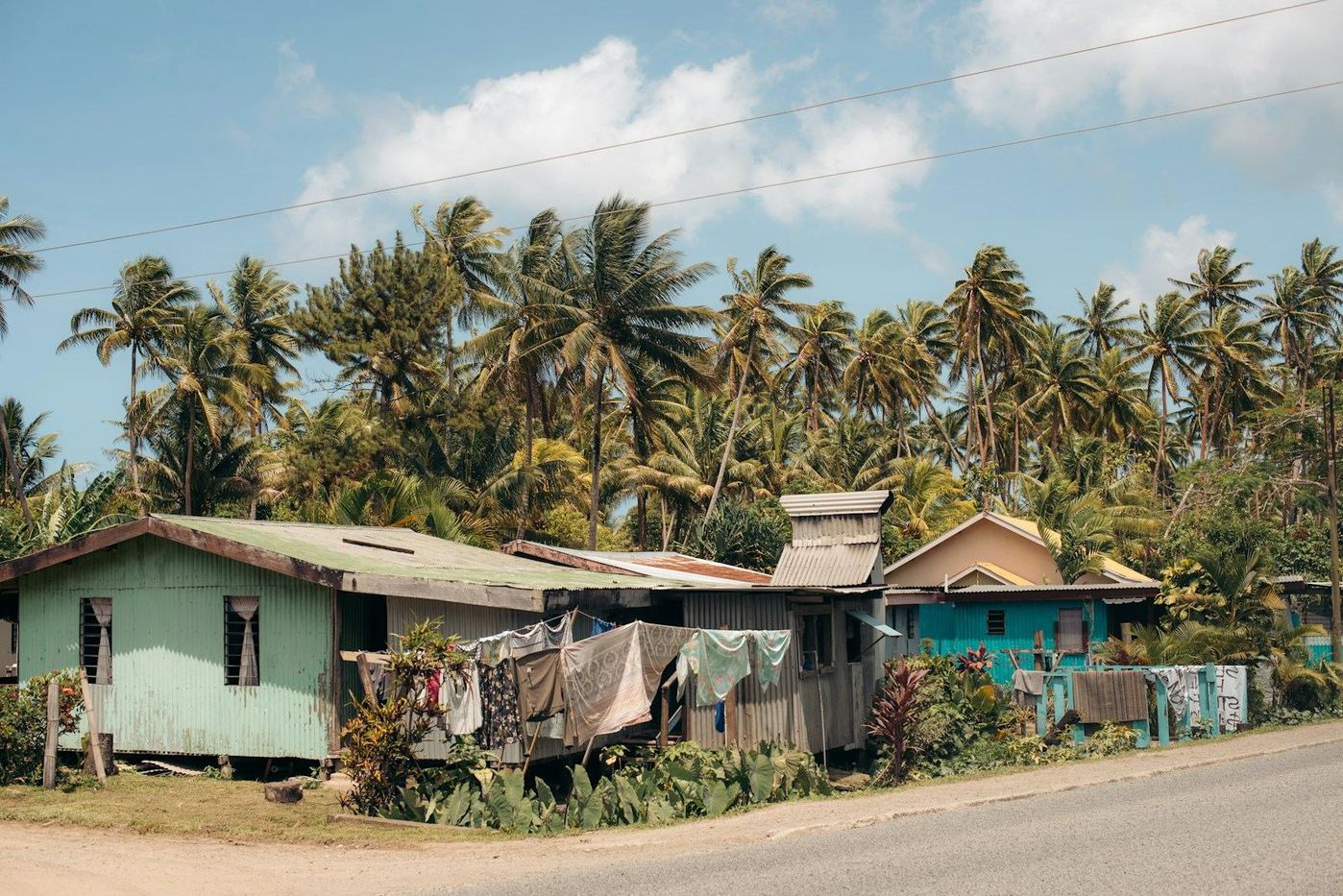
ADB's Commitment to Fiji's Stability
The Asian Development Bank (ADB) announced on 16 September 2026 a $210 million financial package for Fiji, specifically engineered to bolster the nation's economic resilience against external shocks.
This substantial funding commitment aims to counteract the immediate economic fallout stemming from the Middle East conflict, while simultaneously preparing the Pacific island nation for a range of future environmental and economic disruptions.
The initiative focuses on protecting vulnerable households and businesses, and ensuring essential public services can continue without interruption, a strategic imperative highlighted by ADB President Masato Kanda.
He emphasised that "Readiness is a duty owed to every family whose livelihood can be upended by the next shock," underscoring the urgency of Fiji's proactive approach to fortify its capacity to absorb and recover from unforeseen crises.
Addressing Specific Vulnerabilities and Funding Structure
Fiji, like many small island developing states, contends with inherent economic challenges, including remote geographical locations, dispersed populations, and high costs of conducting business.
The nation's economic growth this year is anticipated to slow, primarily due to persistently elevated energy prices linked to the Middle East conflict and the expected impacts of the El Niño weather phenomenon. To address these pressures, the ADB's $210 million package is structured as the second phase of the Fiji Sustainable and Resilient Growth Program.
It includes a $200 million loan specifically allocated for policy reforms, alongside a separate $10 million loan designated for rapid disaster financing, as detailed by the ADB on 16 September 2026.
Advancing Fiscal and Digital Transformation
Building on the achievements of the program's initial phase, which saw improvements in tax administration and public financial management, the second phase targets a new set of policy reforms.
The $200 million reform loan will support measures to expand access to finance across Fiji, strengthen its disaster risk management frameworks, and advance digital transformation initiatives. Furthermore, the funding is intended to enhance the nation's fiscal sustainability, reinforcing its public financial management systems.
These reforms are critical for creating a more stable economic environment and were developed in close coordination with international partners, including the governments of Australia and New Zealand, the European Union, the International Monetary Fund, and the World Bank.
Bolstering Emergency Response and Long-Term Outlook
The $10 million dedicated disaster financing component introduces a critical mechanism, enabling the Fijian government to respond swiftly and effectively to future emergencies. This capability ensures that resources can be mobilised rapidly when every hour counts, as noted by ADB President Masato Kanda on 16 September 2026.
This rapid response capacity, combined with the broader policy reforms supported by the $200 million loan, is expected to significantly enhance Fiji's overall ability to manage and recover from economic and environmental shocks.
The integrated approach aims to ensure the continuity of essential services and protect vulnerable populations, thereby mitigating the impact of future disruptions on the nation's economy and its citizens, and securing long-term fiscal stability.
This analysis is journalism, not investment advice; consult a licensed professional before making financial decisions.
Pieces are credited to the desk that commissioned and edited them. Our editorial standards, and the desks behind them, are set out on the Editorial Standards and Team pages.
Further reading
- Briefings · Industry
What forms will South Korea-Estonia defence industrial cooperation take?
The Korea Defense Industry Association and its Estonian counterpart signed a memorandum on 17 September 2026, aiming to move beyond arms sales to joint development and technology sharing in Europe.
Continue reading → - Briefings · Policy
What integrated policies boost services exports for Asian economies?
Global services exports reached USD 9.6 trillion last year, accounting for nearly 28 per cent of world trade, with digitally delivered services growing 8.5 per cent annually since 2005, according to a 17 September WTO and UNECLAC report.
Continue reading → - Briefings · Companies
Indonesia legal: DNF&P, Hogan Lovells poach A&O Shearman lawyers
Dewi Negara Fachri & Partners, in association with Hogan Lovells Cadwalader, has added two corporate and finance lawyers from A&O Shearman's Indonesian tie-up.
Continue reading →