
Warburg Pincus, Kio's A$2.5bn investment targets Australia's build-to-rent, student housing.
Warburg Pincus and Kio Investment Management’s A$2.5 billion capital commitment to Australia’s build-to-rent and student accommodation sectors demonstrates a strategic focus on defensive real estate assets, driven by persistent housing supply constraints and demographic shifts.
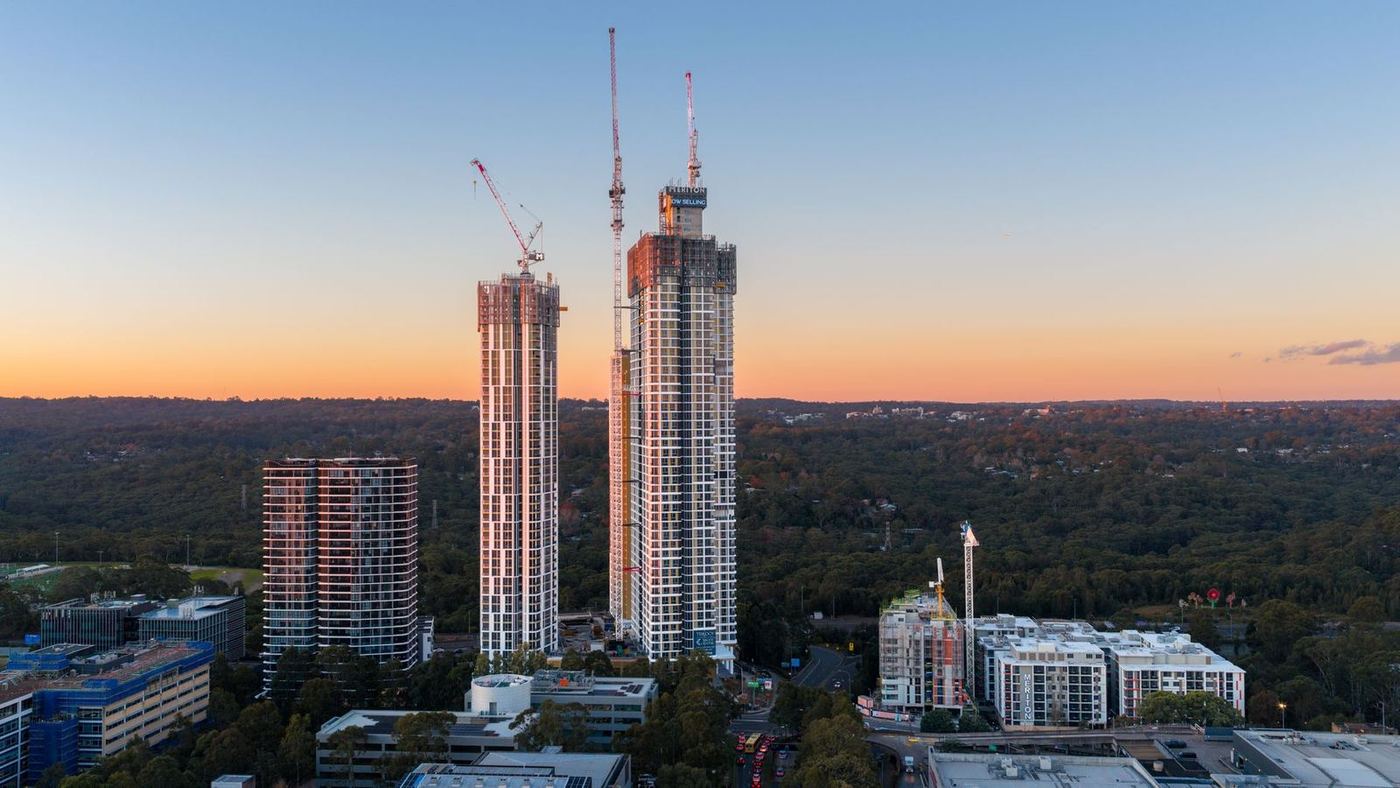
Capital Allocation to Defensive Real Estate
Warburg Pincus, a global private equity firm, and Australian real asset investment manager Kio Investment Management have committed additional capital, aiming for a total rental living portfolio value of A$2.5 billion (approximately US$2.26 billion).
This investment specifically targets the build-to-rent (BTR) sector and expands into purpose-built student accommodation (PBSA) across Australia’s primary urban centres.
The expanded venture, announced on 12 August 2026, reflects a strategic decision to allocate capital towards asset classes that are considered more resilient to economic fluctuations, capitalising on fundamental demand drivers within the Australian property market.
Kio Investment Management, established in 2024, has already secured four projects in Sydney, Melbourne, and Brisbane, with three currently under construction and all having received development approvals.
Drivers of Institutional Rental Housing Demand
The investment thesis for Australia’s rental living sector is underpinned by specific long-term economic and demographic factors. Andrew Fitzpatrick, managing director at Warburg Pincus, noted the compelling nature of these themes for sustained investment.
Key drivers include consistent population growth, which directly increases housing demand, alongside a constrained housing supply across major Australian cities. This imbalance creates an environment where institutionally managed rental housing becomes increasingly attractive, offering stability and scale that individual landlords often cannot match.
The shift towards professional management in residential rentals is a trend observed in several developed markets, suggesting a maturation of the sector as an institutional asset class.
Portfolio Expansion and Development Pipeline
The partnership’s existing portfolio includes four projects in tier-1 submarkets across Sydney, Melbourne, and Brisbane, which have advanced through development approvals, with three already progressing to construction. The expanded commitment is seeded with a fifth BTR asset located in Collingwood, Melbourne.
This specific project is projected to deliver more than 400 apartments, with early construction anticipated to commence in the fourth quarter of 2026. Furthermore, the investment mandate has been broadened to incorporate the acquisition and development of PBSA assets, diversifying the portfolio beyond conventional BTR.
This expansion into student accommodation addresses another segment with consistent demand, driven by Australia’s position as a significant destination for international education.
Kio Investment Management’s Strategic Acceleration
Kio Investment Management, founded in 2024 by Sam Bisla, former managing director and head of living at Hines, has rapidly established a presence in Australia’s rental living markets. Bisla stated that the expanded capital commitment enables the partnership to accelerate its next growth phase.
This involves increasing the existing BTR portfolio and integrating PBSA, thereby creating a more diversified institutional living platform. The rapid pace of project acquisition and development approvals since Kio’s inception suggests an agile strategy aimed at capturing market share in a sector experiencing structural demand.
This operational velocity, supported by significant capital injection, positions the venture to execute its development pipeline efficiently.
Implications for Regional Capital Flows
This A$2.5 billion commitment by Warburg Pincus and Kio Investment Management to Australia’s rental housing sector demonstrates how institutional capital is targeting defensive asset classes within the Asia-Pacific region.
The rationale, citing population growth and housing supply constraints, is not unique to Australia; similar dynamics are present in urban centres across Asia, including Singapore, Hong Kong, and parts of Japan.
While direct comparisons require granular analysis of local regulations and market structures, the trend reveals that investors are prioritising sectors offering stable, long-term yields.
Asian real estate funds and private equity firms may find increased competition for comparable assets or be prompted to explore similar investment strategies in their domestic or regional markets.
Decision-makers should monitor the performance of these Australian BTR and PBSA assets, particularly their occupancy rates and rental yields, in the 2027–28 period, as these metrics will offer insight into the broader viability and scalability of such institutional residential platforms across developed Asia-Pacific economies.
This analysis is journalism, not investment advice; consult a licensed professional before making financial decisions.
Pieces are credited to the desk that commissioned and edited them. Our editorial standards, and the desks behind them, are set out on the Editorial Standards and Team pages.
Further reading
- Briefings · Markets
SoftBank Group shares drop 11% after OpenAI delays IPO
The Tokyo-listed investment firm saw its stock decline significantly earlier this week, following an announcement from OpenAI that it would delay its initial public offering and advocate for slower AI development.
Continue reading → - Briefings · Policy
Will South Korea's Corporate Tax Rate Be Reduced?
Finance Minister nominee Lee Hyoung-il confirmed on Sunday that the 25% corporate tax rate, reinstated this year, will not be lowered, influencing business investment forecasts for the coming fiscal periods.
Continue reading → - Briefings · Policy
RBI proposes freezing accounts for cyber fraud
India's central bank seeks public input on proposed amendments to its Know Your Customer directions, aiming to formalise how banks can temporarily freeze accounts linked to cyber fraud by October 2, 2026.
Continue reading →