
Eu Family S$40m GCB Sale Signals Strong Singapore Luxury Market
The S$40 million sale of a Good Class Bungalow by the Eu Yan Sang founding family in central Singapore demonstrates sustained high-value capital movement within this exclusive property segment, despite a noted moderation in overall transaction volumes during the first half of 2026.
A Significant Transaction Amidst Market Moderation
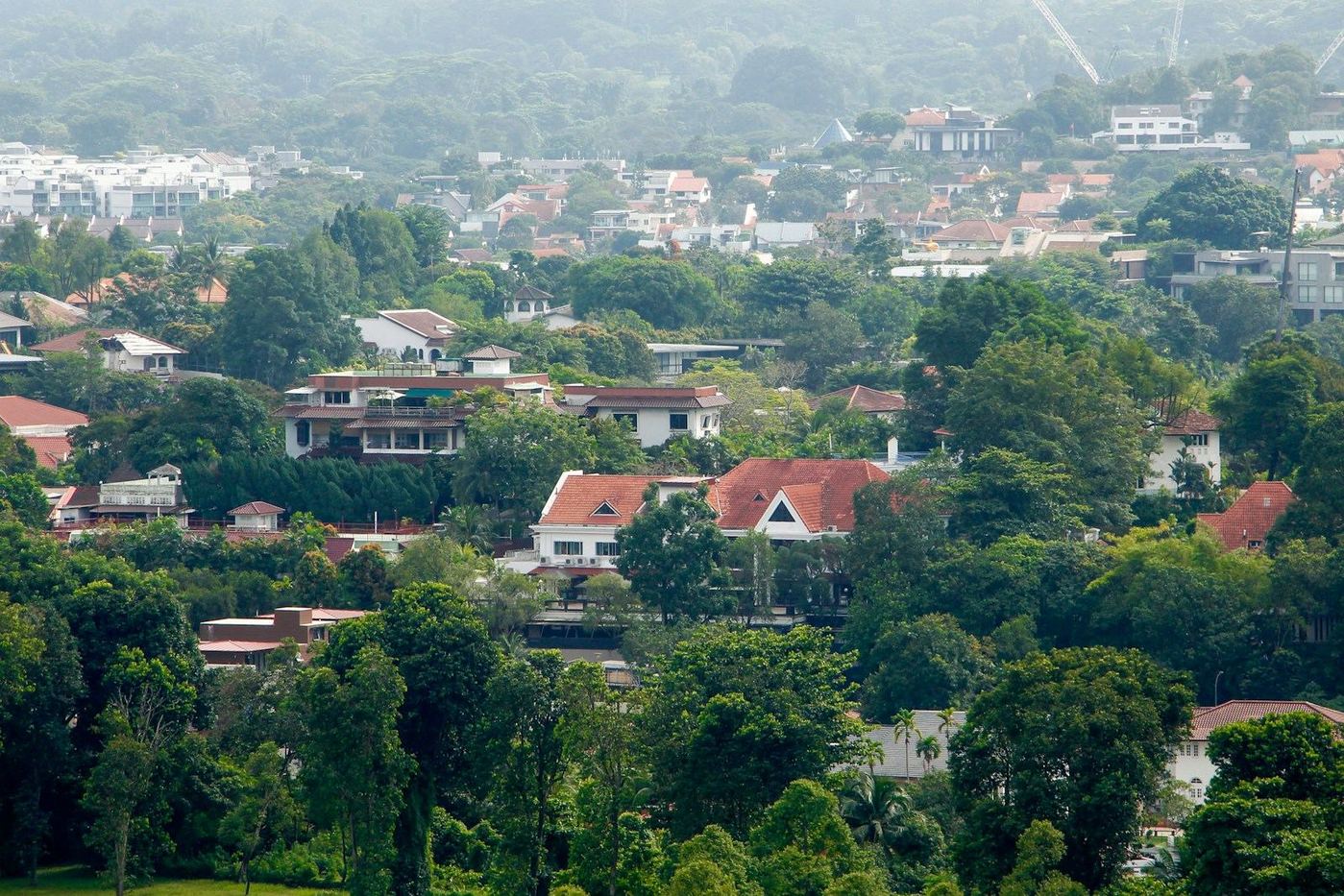
A bungalow owned by members of the Eu family, founders of the Chinese medicine group Eu Yan Sang, was sold for S$40 million (US$31.5 million) in central Singapore. The property, located on Bishopsgate within the Chatsworth Park Good Class Bungalow (GCB) Area, encompasses approximately 16,124 square feet of freehold land.
The transaction price was S$2,480.72 per square foot, as reported by The Business Times. The buyers are understood to be related to Wee Siew Kim, co-president of Nippon Paint Holdings. This particular GCB was inherited by Richard Eu Yee Ming and his siblings David, Helena, and Geoffrey, following the passing of their father, Richard Eu Keng Mun, in 2022.
GCBs are among Singapore's most sought-after landed homes, subject to strict planning regulations, including a minimum land size of 1,400 square metres and a two-storey height restriction, according to the Urban Redevelopment Authority.
Reduced Transaction Volumes in the Good Class Bungalow Segment
This high-value sale occurs during a period where the broader GCB market has experienced reduced activity. Analysis by property consultancy Knight Frank, cited by EdgeProp Singapore, indicates that eight GCBs changed hands in the first half of 2026, totalling S$474.6 million.
This represents a decrease from the second half of 2025, which saw 16 properties sold for a combined S$764.3 million. The reduction in transaction count was 50%, while the total transacted value declined by approximately 37.9% between these two periods.
Knight Frank attributed this moderation to increased buyer selectivity within the landed property market, leading to extended negotiation timelines and persistent differences in price expectations between sellers and prospective buyers.
Implications of Sustained High-Value Capital Allocation
The S$40 million Eu family transaction, despite the overall market moderation, demonstrates that significant capital continues to be allocated to prime GCB assets in Singapore.
This suggests that while the volume of transactions may be lower, demand for specific, well-located properties remains robust among a segment of buyers with substantial liquidity and a long-term investment perspective on Singapore's ultra-luxury real estate.
The profile of the buyer, linked to a global industrial leader, further reinforces the type of sophisticated capital attracted to these exclusive assets.
This indicates that the market is not experiencing a broad downturn, but rather a more discerning environment where only specific properties command premium valuations, reflecting the intrinsic value of GCBs due to their limited supply and stringent development rules.
Factors Driving Buyer Selectivity and Market Dynamics
The observed buyer selectivity, longer negotiation periods, and price expectation differences, as identified by Knight Frank's analysis for the first half of 2026, suggest a recalibration of pricing power within the GCB market.
Buyers are likely evaluating properties more rigorously, focusing on attributes such as precise location, land characteristics, and potential for enhancement or redevelopment. This implies that sellers may need to adjust their initial asking prices to align with current market sentiment and buyer valuations.
The GCB segment, defined by its 39 designated areas, inherently maintains a high value due to scarcity. However, transaction velocity can fluctuate based on broader economic conditions and shifts in investor confidence, leading to a more balanced negotiation environment than in periods of heightened activity.
The Consequence for Singapore's Ultra-Luxury Property Market
For investors and decision-makers observing Singapore's ultra-luxury property market, the S$40 million Eu family transaction confirms that high-net-worth capital continues to target exceptional assets, even as the overall GCB market experienced a reduction in transaction volume during the first half of 2026.
The 50% decrease in GCB sales count and 37.9% fall in total value during H1 2026, compared to H2 2025, indicates a more selective environment rather than a withdrawal of capital.
Investors should monitor transaction volumes and average price per square foot figures in the GCB segment in Q3 and Q4 2026 to assess whether this moderation is a temporary adjustment or a more sustained trend. Key data will emerge with the release of full H2 2026 market reports from property consultancies, typically available in early 2027.
This analysis is journalism, not investment advice; consult a licensed professional before making financial decisions.
Pieces are credited to the desk that commissioned and edited them. Our editorial standards, and the desks behind them, are set out on the Editorial Standards and Team pages.
Further reading
- Briefings · Industry
How will Japan's fiscal 2031 quantum sensor drone plan reshape undersea surveillance?
Japan's defence budget request, released in late August, outlines a plan to deploy drone-mounted quantum magnetic sensors by fiscal 2031. This initiative seeks to improve maritime detection efficiency and reduce operational costs.
Continue reading → - Briefings · Markets
How do US$100 oil and 5% US yields divide ASEAN currencies?
Analysts observe a significant split in regional currency performance, with some benefiting from trade surpluses and capital inflows while others face import cost pressures.
Continue reading → - Briefings · Markets
How will RBI's September 16 reverse repo affect India's liquidity?
The Reserve Bank of India will conduct an overnight variable rate reverse repo operation on September 16, 2026, aiming to absorb surplus funds from the banking system.
Continue reading →