
Raj Kumar, Kishin RK's S$320M Scotts Square Deal Signals Singapore Retail Repositioning
Exclusive due diligence for Scotts Square, valued at S$320 million, demonstrates continued investor interest in prime Singapore retail assets and a strategy focused on property repositioning.
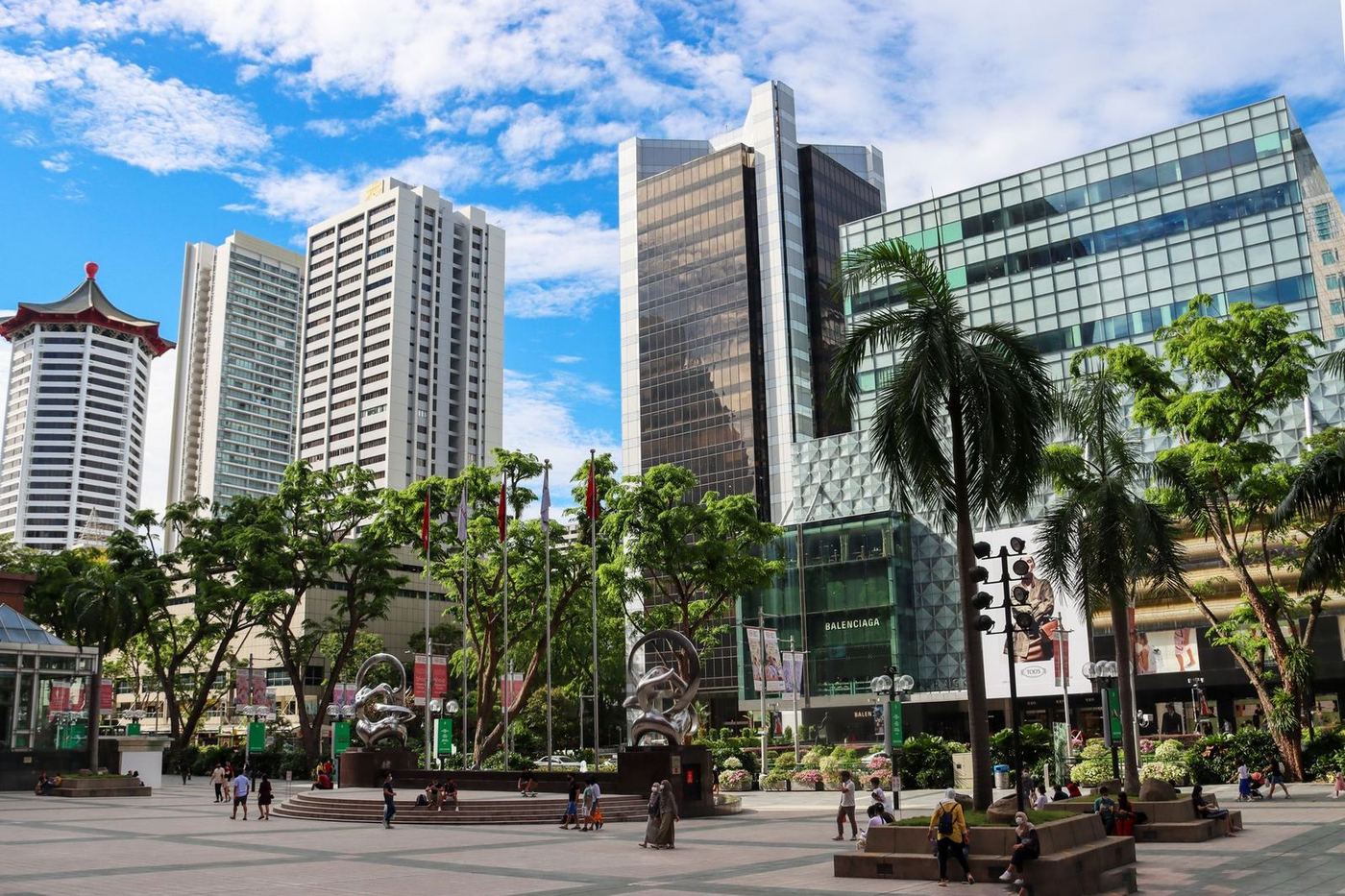
Prime Orchard Road Asset Under Consideration for Acquisition
A team comprising Raj Kumar and his son, Kishin RK, is undertaking exclusive due diligence for the potential acquisition of Scotts Square, a four-level freehold retail mall situated on Scotts Road, adjacent to Orchard Road. The estimated transaction value for this property stands at approximately S$320 million.
This process represents an early stage in a potential sale agreement. The asset, currently held by Wharf Estates Singapore, a wholly owned subsidiary of the Hong Kong-listed Wharf Real Estate Investment Company, is a significant component of Singapore's prime retail landscape.
The involvement of established property investors in such a process suggests a calculated approach to asset management within the city-state’s core commercial districts, focusing on properties that can undergo strategic enhancements.
Seller's Strategic Divestment in Singapore's Core Retail Market
The potential divestment of Scotts Square by Wharf Estates Singapore follows another notable transaction involving its parent company. Wharf Real Estate Investment Company completed the sale of Wheelock Place, another prominent Orchard Road asset, to Hongkong Land’s Singapore Central Private Real Estate Fund (SCPREF) in July 2026 for S$1.1 billion.
These transactions collectively show a strategic recalibration of Wharf Real Estate Investment Company's holdings within Singapore's prime retail property sector.
The sale of two freehold properties in close proximity and within a similar timeframe indicates a focused approach to capital deployment and portfolio optimisation by the Hong Kong-based conglomerate, potentially freeing up capital for other ventures or market opportunities.
Repositioning as a Core Strategy for Retail Property Value
Scotts Square possesses characteristics that allow for significant refurbishment and reorganisation, according to market observations. This capacity for material updating and reconfiguring aligns with a broader industry trend where existing retail properties are being adapted to meet evolving consumer preferences.
Rather than constructing new facilities, investors are increasingly evaluating the potential to enhance the value of established assets through modernisation, tenant mix adjustments, and amenity upgrades.
Such a strategy aims to capture shifts in consumer behaviour, which increasingly prioritises experiential retail and integrated lifestyle offerings over traditional shopping formats. The focus on such an asset suggests that value creation in prime retail often involves operational and physical transformation.
Implications for Singapore's Orchard Road Retail Sector
This potential S$320 million transaction demonstrates continued investor confidence in Singapore's prime Orchard Road retail assets. The activity by prominent property investors, including the earlier S$1.1 billion acquisition of Wheelock Place in July 2026, shows that capital remains directed towards properties with strong fundamental attributes and scope for enhancement.
The emphasis on repositioning older, well-located malls suggests a mature market where competitive advantage is gained through strategic asset management rather than pure expansion.
For decision-makers in the retail property sector, this indicates that investment returns are increasingly tied to the capacity for proactive asset enhancement and understanding nuanced consumer demand shifts, rather than relying solely on location.
The Consequence for Future Retail Property Investment
The due diligence for Scotts Square, at an estimated S$320 million, establishes a specific valuation benchmark for freehold retail assets in Singapore's prime Orchard Road precinct in August 2026. This activity confirms that established investors continue to seek value through the strategic acquisition and subsequent enhancement of existing properties.
Decision-makers should monitor the formal announcement of this acquisition and any subsequent details regarding refurbishment plans, as these will provide further insight into the specific capital expenditure required to revitalise such assets and the projected returns.
The success of such repositioning efforts will offer a tangible case study for similar investments in the region, particularly those targeting a shift from traditional retail models to integrated lifestyle destinations.
This analysis is journalism, not investment advice; consult a licensed professional before making financial decisions.
Pieces are credited to the desk that commissioned and edited them. Our editorial standards, and the desks behind them, are set out on the Editorial Standards and Team pages.
Further reading
- Briefings · Industry
How will Japan's fiscal 2031 quantum sensor drone plan reshape undersea surveillance?
Japan's defence budget request, released in late August, outlines a plan to deploy drone-mounted quantum magnetic sensors by fiscal 2031. This initiative seeks to improve maritime detection efficiency and reduce operational costs.
Continue reading → - Briefings · Markets
How do US$100 oil and 5% US yields divide ASEAN currencies?
Analysts observe a significant split in regional currency performance, with some benefiting from trade surpluses and capital inflows while others face import cost pressures.
Continue reading → - Briefings · Markets
How will RBI's September 16 reverse repo affect India's liquidity?
The Reserve Bank of India will conduct an overnight variable rate reverse repo operation on September 16, 2026, aiming to absorb surplus funds from the banking system.
Continue reading →