
China's 100 Zero-Carbon Parks: Belt and Road Expansion Faces Replication Challenges
China's ambition to establish 100 national-level zero-carbon industrial parks by 2030 aims to reduce domestic emissions significantly. However, the global replication of this model encounters considerable challenges, particularly given the carbon-intensive nature of some existing Chinese overseas industrial investments.
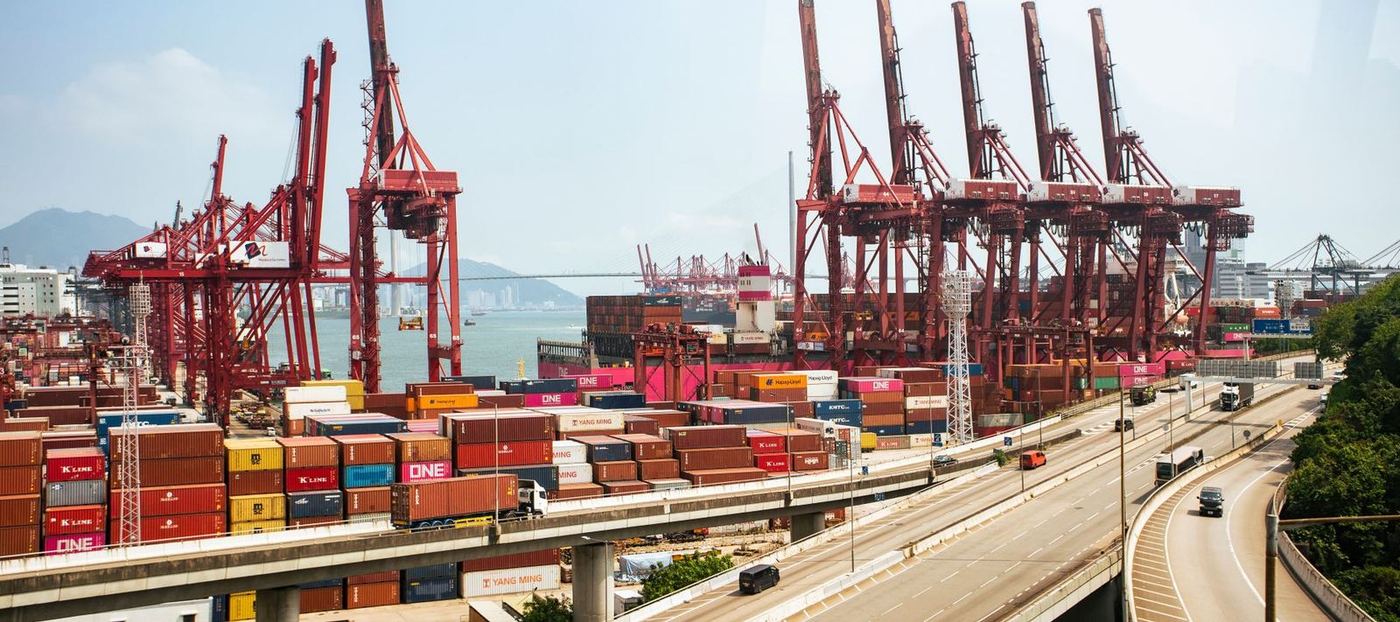
Domestic Decarbonisation Drive
China's 15th Five Year Plan, released in March 2026, details a strategic target to construct approximately 100 national-level zero-carbon industrial parks by 2030. These zones are designed for industrial production with net-zero or near-zero carbon emissions, marking a substantial upgrade from previous pilot projects and elevating such initiatives to a national priority.
This domestic commitment addresses a significant contributor to China's overall emissions, with industrial parks estimated to account for nearly one-third of the country's total carbon output, according to energy non-profit RMI.
The initiative represents a critical step in accelerating and deepening China's decarbonisation efforts, particularly within hard-to-abate sectors such as steel, cement, and chemicals, which frequently cluster within these industrial zones.
As China's industrial ecosystem becomes increasingly integrated with global supply chains, questions arise regarding the potential for this domestic decarbonisation model to extend to overseas operations.
Evolving Standards and Implementation
The concept of low- and zero-carbon industrial parks in China has evolved since at least the 11th Five Year Plan (2006-2010), which saw the establishment of “pilot ecological industrial parks.” Early efforts trace back to 2001 with the first “eco-industrial park” in Guangxi province, a sugar processing complex incorporating circular economy principles.
During the 14th Five Year Plan (2021-25), China's “1+N” climate policy framework explicitly promoted the development of “green and low-carbon industrial parks” and “near-zero carbon emission demonstration projects.” This marked a systematisation and scaling up of emission reduction efforts, as noted by Liu Jingning and Yang Li, researchers from iGDP.
By 2024, the term “zero-carbon parks” appeared in central government documents, culminating in its inclusion in the 15th Five Year Plan in March 2026. The National Development and Reform Commission (NDRC) further published a list of 52 national-level zero-carbon industrial parks slated for construction before 2030 by end-2025.
Despite these advancements, Chinese policymakers have not provided a singular definition for a “zero-carbon industrial park,” leading to varied approaches across provinces based on economic strengths and policy priorities. This lack of a unified standard and consistent carbon accounting and certification systems presents a challenge for broad implementation.
Overseas Investments and Carbon Intensity
Industrial parks are widely recognised as central instruments for economic development, attracting foreign investment and facilitating industrial growth.
China hosts nearly half of the world’s 5,383 industrial parks and special economic zones, according to RMI data, and Chinese companies are expanding the model abroad: the World Resources Institute identified 159 overseas Chinese industrial parks as of 2022, concentrated in Southeast Asia (45 per cent), Africa (28 per cent) and Europe (25 per cent).
The carbon intensity of some of those investments is the difficulty.
Nickel smelting parks such as Indonesia Morowali Industrial Park and Indonesia Weda Bay Industrial Park, both carrying substantial investment from China’s Tsingshan, rely heavily on coal power for energy-intensive processes; IWIP alone incorporates 4.5GW of coal capacity, predominantly invested in and operated by Chinese companies, as reported by the Centre for Research on Energy and Clean Air and Global Energy Monitor.
Yang Muyi, a senior energy analyst at Ember, observes that investing in high-value sectors on a fossil-fuel foundation carries considerable risk for Chinese investors seeking to decarbonise their supply chains.
Potential for Greener Overseas Development
Despite the current carbon intensity of some Chinese overseas industrial parks, a potential pathway for greener development exists. A mapping of these parks by the World Resources Institute (WRI) reveals that a majority are situated in regions with abundant solar resources.
WRI’s research indicates a potential for nearly 420GW of solar photovoltaic (PV) capacity and over 116GW of wind power capacity at these locations. Harnessing this renewable energy potential could avoid 340 million metric tons of carbon dioxide emissions, according to analysis by Jing Song, a research associate with WRI China’s Sustainable Transition Center Energy Program.
This demonstrates that while current practices in some overseas parks contribute to emissions, the geographical placement of many offers a clear opportunity for a transition towards lower-carbon energy sources.
Realising this potential would require strategic investment in renewable energy infrastructure and a commitment to integrating these sources into the operational frameworks of new and existing industrial parks.
Consequences for Asian Markets
The divergence between China's domestic ambition for 100 zero-carbon industrial parks by 2030 and the carbon-intensive reality of some overseas investments presents a strategic challenge for both Chinese enterprises and host nations in Asia.
For Asian economies, particularly those in Southeast Asia which host 45 per cent of Chinese overseas industrial parks, the continued reliance on fossil fuels, exemplified by the 4.5GW coal power capacity at Indonesia's IWIP, poses a long-term carbon lock-in risk.
Decision-makers in these host countries must scrutinise the carbon footprint of incoming foreign direct investment against their own national decarbonisation targets.
The absence of a unified definition and consistent carbon accounting for overseas Chinese industrial parks, in contrast to the clear domestic directive, means that investors and policymakers lack robust benchmarks for evaluating environmental performance.
Future capital allocation decisions for industrial development in Asia will increasingly depend on demonstrable commitments to lower-carbon energy sources.
This is especially pertinent given the identified potential for 420GW of solar PV and 116GW of wind power capacity at existing overseas industrial sites, a resource that remains largely untapped and could redefine the sustainability profile of industrial expansion in the region.
This analysis is journalism, not investment advice; consult a licensed professional before making financial decisions.
Pieces are credited to the desk that commissioned and edited them. Our editorial standards, and the desks behind them, are set out on the Editorial Standards and Team pages.
Further reading
- Briefings · Industry
How will Japan's fiscal 2031 quantum sensor drone plan reshape undersea surveillance?
Japan's defence budget request, released in late August, outlines a plan to deploy drone-mounted quantum magnetic sensors by fiscal 2031. This initiative seeks to improve maritime detection efficiency and reduce operational costs.
Continue reading → - Briefings · Markets
How do US$100 oil and 5% US yields divide ASEAN currencies?
Analysts observe a significant split in regional currency performance, with some benefiting from trade surpluses and capital inflows while others face import cost pressures.
Continue reading → - Briefings · Markets
How will RBI's September 16 reverse repo affect India's liquidity?
The Reserve Bank of India will conduct an overnight variable rate reverse repo operation on September 16, 2026, aiming to absorb surplus funds from the banking system.
Continue reading →