
CDL's H1 2026 Profit Soars 230%, UOL Up 23% Amid Singapore Property Surge
Singapore's major listed developers, City Developments Ltd (CDL) and UOL Group, reported substantial net profit increases for H1 2026, driven by residential project completions and strategic initiatives. Conversely, real estate agencies PropNex and Apac Realty recorded profit declines, reflecting a shift in the new launch pipeline.
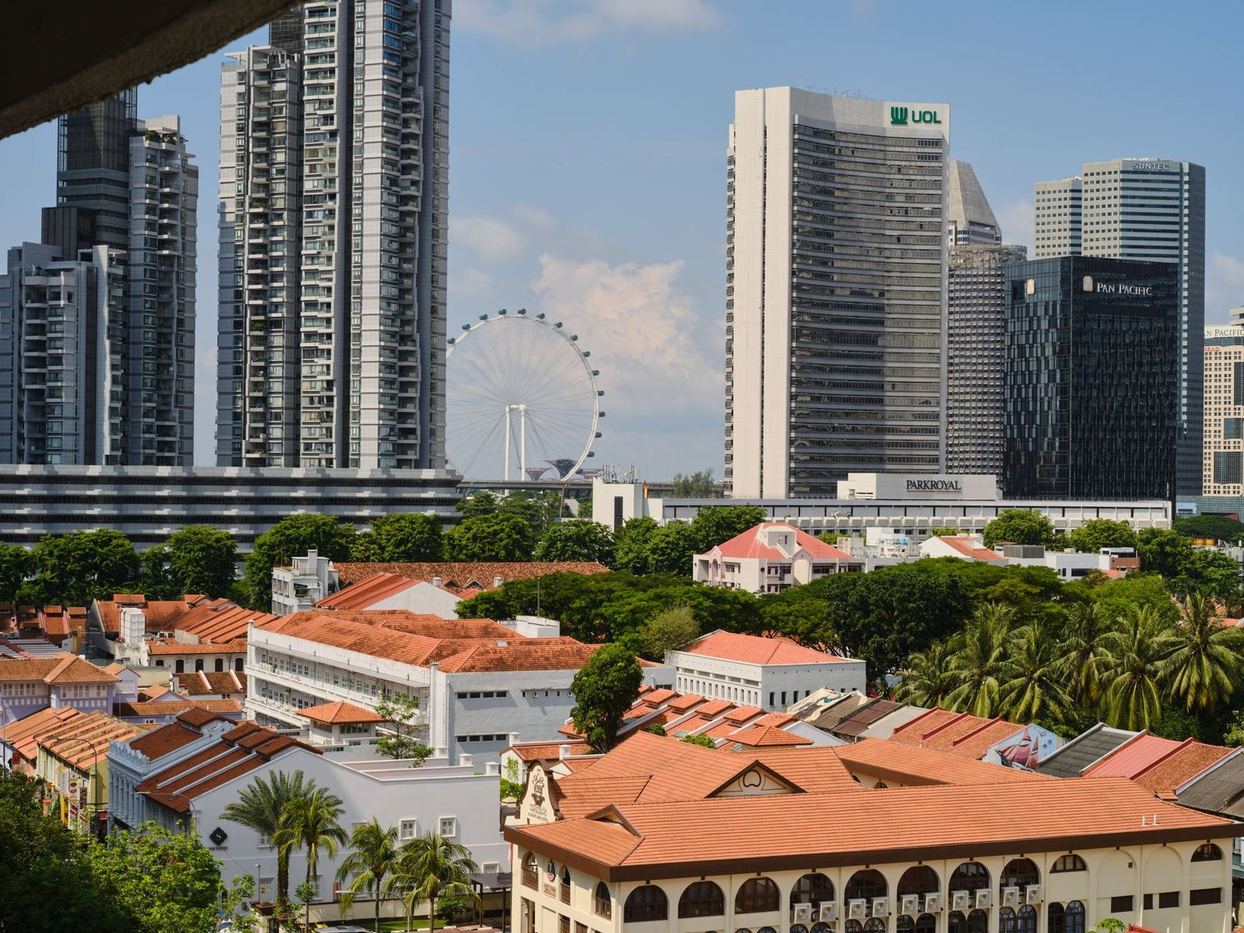
Divergent Performance in Singapore's Property Sector
Singapore's property sector demonstrated a split performance in the first half of 2026, with major developers City Developments Ltd (CDL) and UOL Group posting significant profit improvements, while real estate agencies PropNex and Apac Realty experienced reduced earnings.
This divergence stems primarily from the developers' successful execution of residential projects and strategic asset management, contrasted with the agencies' exposure to a tapering pipeline of new property launches.
CDL's net profit increased by 230.7 per cent to S$301.6 million for the six months ending June 30, 2026, and UOL's net profit rose by 23 per cent to S$252.2 million over the same period. In contrast, PropNex's net profit fell by 3.1 per cent to S$40.9 million, and Apac Realty's declined by 16.8 per cent to S$9.4 million during H1 2026.
This indicates a market where completed projects are monetising effectively for developers, even as the volume of new launches moderates from the four-year high observed in 2025.
CDL's Strategic Review and Revenue Drivers
CDL's substantial H1 2026 financial performance was underpinned by a 61.1 per cent increase in revenue, reaching S$2.72 billion. This was largely driven by the full recognition of Lumina Grand, an executive condominium in Bukit Batok that achieved complete sales and completion.
Additionally, CDL's hotel business returned to profitability, reporting a pre-tax profit of S$42 million, a reversal from an S$84.4 million loss in the previous year. The company's interim dividend was doubled to S$0.06 per share, with net gearing recorded at 75 per cent at the end of June 2026.
Analysts from OCBC, Phillip Securities Research, CGS International, DBS, and RHB Singapore maintained positive ratings on CDL, citing value creation from recent share price movements and anticipation of the outcomes from its strategic review.
The review, expected to be unveiled by end-September 2026, could provide potential for asset recycling, deleveraging, and expansion of the fund management business, according to Phillip Securities Research.
UOL's Residential Pipeline and Rental Gains
UOL Group's 23 per cent net profit increase in H1 2026 was supported by continued strength in its property development and investment businesses. The company reported robust office and retail rental reversions, achieving 7.3 per cent and 5.5 per cent respectively in H1 2026, a trend UOL anticipates will persist.
Analysts from DBS, CGS International, and OCBC maintained positive ratings, highlighting UOL's substantial residential development pipeline as a key earnings driver. This pipeline includes the Marina Square redevelopment, which is projected to add 702 residential units, with written permission from the Urban Redevelopment Authority expected in the third quarter of 2026.
Furthermore, UOL is preparing to commence marketing for its 1,268-unit Thomson Reserve project in the fourth quarter of 2026, followed by Dorset Gardens with approximately 428 units in H1 2027, and a Hougang Central mixed-use development featuring over 800 residential units in H2 2027. The NoMad Hilton Singapore, scheduled to open in late 2026, is also expected to contribute to earnings from 2027.
Agencies Face Project Marketing Income Contraction
In contrast to the developers, real estate agencies PropNex and Apac Realty experienced declines in net profit during H1 2026. PropNex's net profit decreased by 3.1 per cent to S$40.9 million, despite a marginal 0.7 per cent increase in revenue to S$603 million. Apac Realty's net profit saw a more pronounced decrease of 16.8 per cent, falling to S$9.4 million.
This contraction in earnings for both agencies is directly attributable to a reduction in project marketing income, a consequence of a smaller pipeline of new property launches. While overall home sales reached a four-year high in 2025, the subsequent moderation in new project introductions has directly impacted the revenue streams dependent on these launches.
This shift suggests a market where the primary sales activity is transitioning from new project launches to resale transactions, or a temporary lull in developer releases, affecting the agencies' traditional revenue drivers.
Implications for Capital Allocation and Market Outlook
The divergent H1 2026 performances in Singapore's property sector underscore distinct exposures to market dynamics. For investors and decision-makers, the focus for developers like CDL and UOL will be on the execution of their announced strategies and project pipelines.
CDL's strategic review outcome, due by end-September 2026, represents a critical near-term event that could clarify its capital allocation framework and future direction. UOL's extensive development schedule, with projects like Thomson Reserve launching in Q4 2026 and others extending into 2027, provides a clear roadmap for future earnings.
Conversely, real estate agencies must adapt to a potentially sustained period of fewer new launches. Their ability to diversify revenue streams beyond project marketing, or to capitalise on resale market activity, will be key. The market will closely observe the pace of new project approvals and launches in Q3 and Q4 2026 to assess the trajectory of agency earnings into 2027.
This analysis is journalism, not investment advice; consult a licensed professional before making financial decisions.
Pieces are credited to the desk that commissioned and edited them. Our editorial standards, and the desks behind them, are set out on the Editorial Standards and Team pages.
Further reading
- Briefings · Industry
How will Japan's fiscal 2031 quantum sensor drone plan reshape undersea surveillance?
Japan's defence budget request, released in late August, outlines a plan to deploy drone-mounted quantum magnetic sensors by fiscal 2031. This initiative seeks to improve maritime detection efficiency and reduce operational costs.
Continue reading → - Briefings · Markets
How do US$100 oil and 5% US yields divide ASEAN currencies?
Analysts observe a significant split in regional currency performance, with some benefiting from trade surpluses and capital inflows while others face import cost pressures.
Continue reading → - Briefings · Markets
How will RBI's September 16 reverse repo affect India's liquidity?
The Reserve Bank of India will conduct an overnight variable rate reverse repo operation on September 16, 2026, aiming to absorb surplus funds from the banking system.
Continue reading →